IT Services & Support in Nashville, TN
Support: (615) 377-0054 Sales: (615) 649-6001

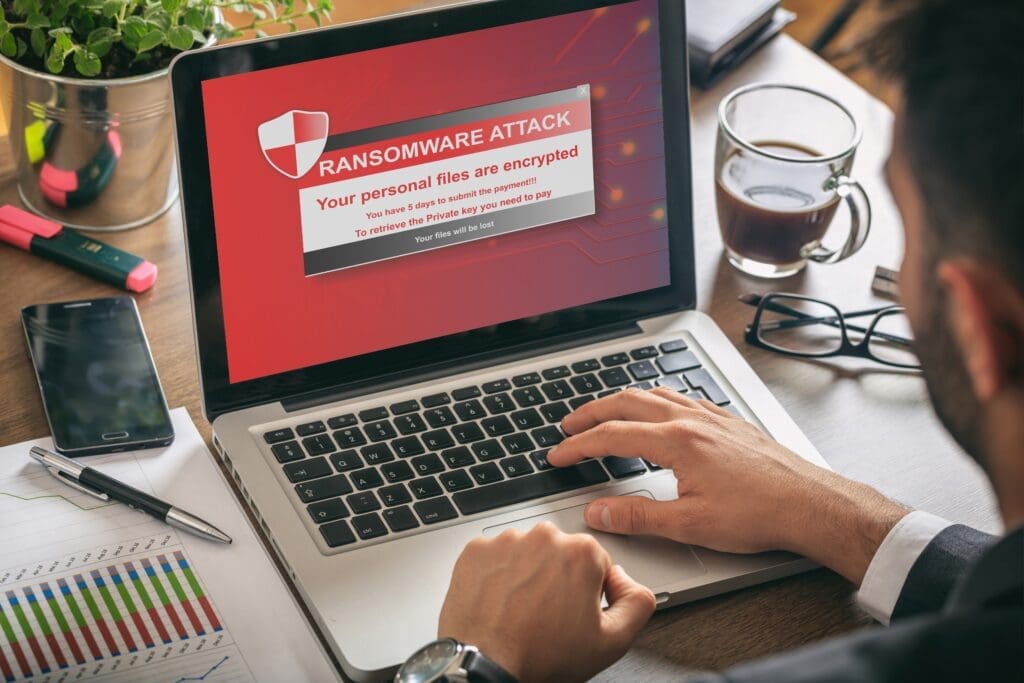
Ransomware attacks on small and mid-sized businesses increased 300% last year. The average ransom payment is $1.54 million. And 60% of small businesses that experience a significant cyber attack close within six months. These are not hypothetical statistics. They are other people’s businesses.
Attackers don’t go after small businesses by accident. They go after them specifically — because the defenses are thinner, the response is slower, and the willingness to pay to get data back quickly is higher.
Enterprise companies have dedicated security teams, breach response protocols, and cyber insurance with low deductibles. Small businesses have an IT vendor they see once a quarter and a cyber insurance policy they signed without fully reading the exclusions.
The attackers know this. They have spreadsheets.
You don’t need an enterprise security stack to stop most ransomware. You need five things implemented correctly.
1. Endpoint detection and response (EDR). Not basic antivirus — behavioral detection that identifies ransomware activity in progress and stops it before it spreads. Standard antivirus misses 40% of modern ransomware variants.
2. Offsite, immutable backups. Ransomware encrypts everything it can reach — including attached drives and network shares. Your backup needs to be offsite, versioned, and read-only from the network, so it can’t be encrypted too.
3. Email filtering. Most ransomware arrives via phishing. A properly configured email security layer blocks the majority of malicious attachments before they reach an inbox.
4. MFA everywhere. If an attacker gets credentials through phishing, MFA is the last line of defense before they’re inside your systems.
5. An incident response plan. When (not if) something happens, how many minutes before your team knows? Who makes the call? What gets isolated? Businesses that practice this recover in hours. Those that don’t can take weeks.
None of these five controls require your team to become security experts. NCI deploys and manages them — and tests them, so you know they’re working before you need them to save you.
More importantly, NCI translates this into business language for leadership. What’s the risk exposure? What’s the cost of the controls? What does a recovery scenario look like? These are executive-level questions that deserve executive-level answers.
The gap between a business that survives a ransomware attack and one that doesn’t is almost always about preparation, not luck.
Book a free 30-minute executive consult with NCI. We’ll review your current exposure and tell you, plainly, where you stand.